
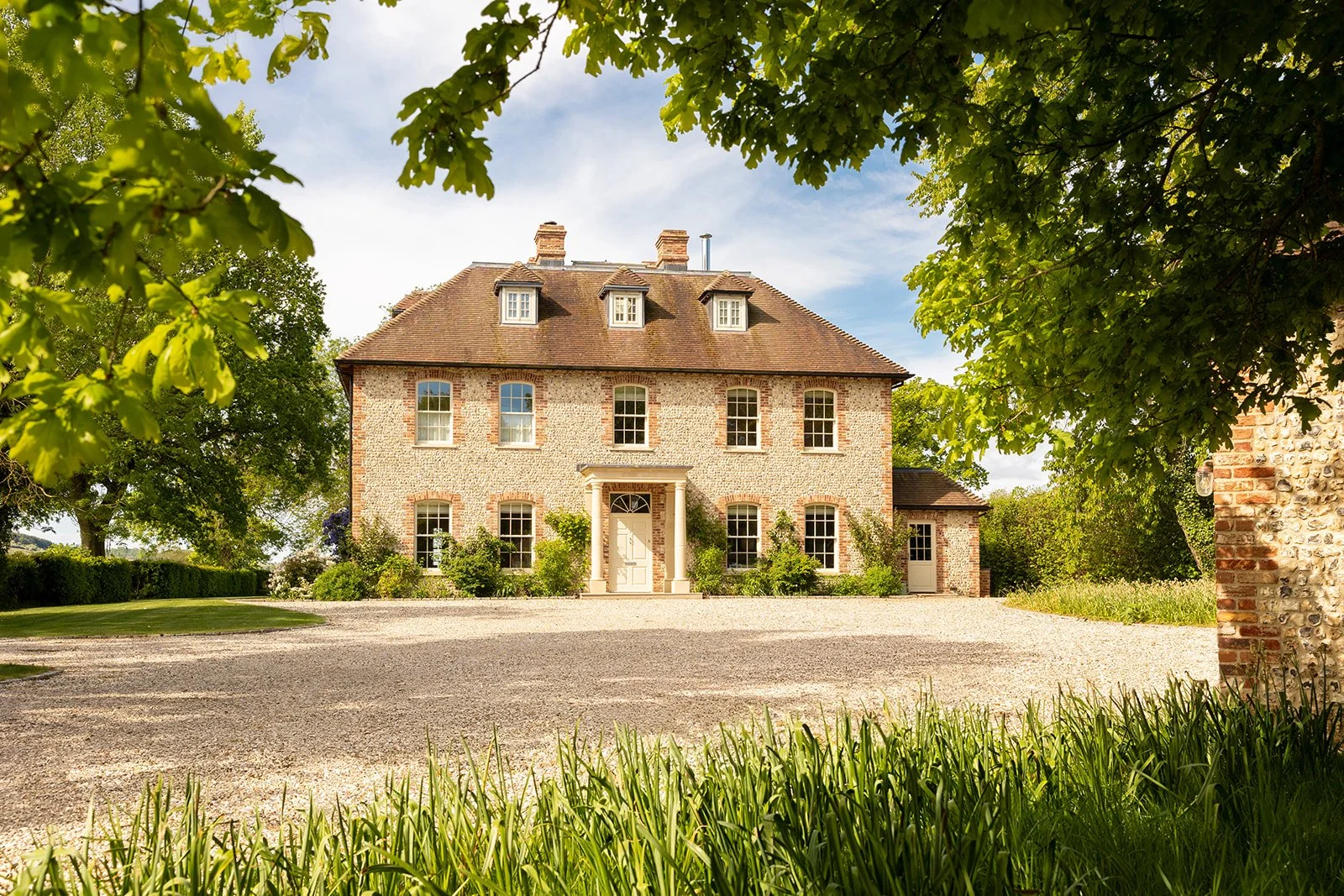
Build Management: full residential project delivery
From brief to handover
The decisions shaping how a house functions, made once and made well.
The margin for getting it right narrows quickly once construction starts.
A residential project involves hundreds of decisions, most of them interdependent and many of them permanent once made. The accumulation of early choices determines how a house functions for years afterwards. Most of those choices are made before a contractor is on site.
Coburn is involved from the point at which a client decides to proceed and remains closely involved through design, procurement, construction and handover.
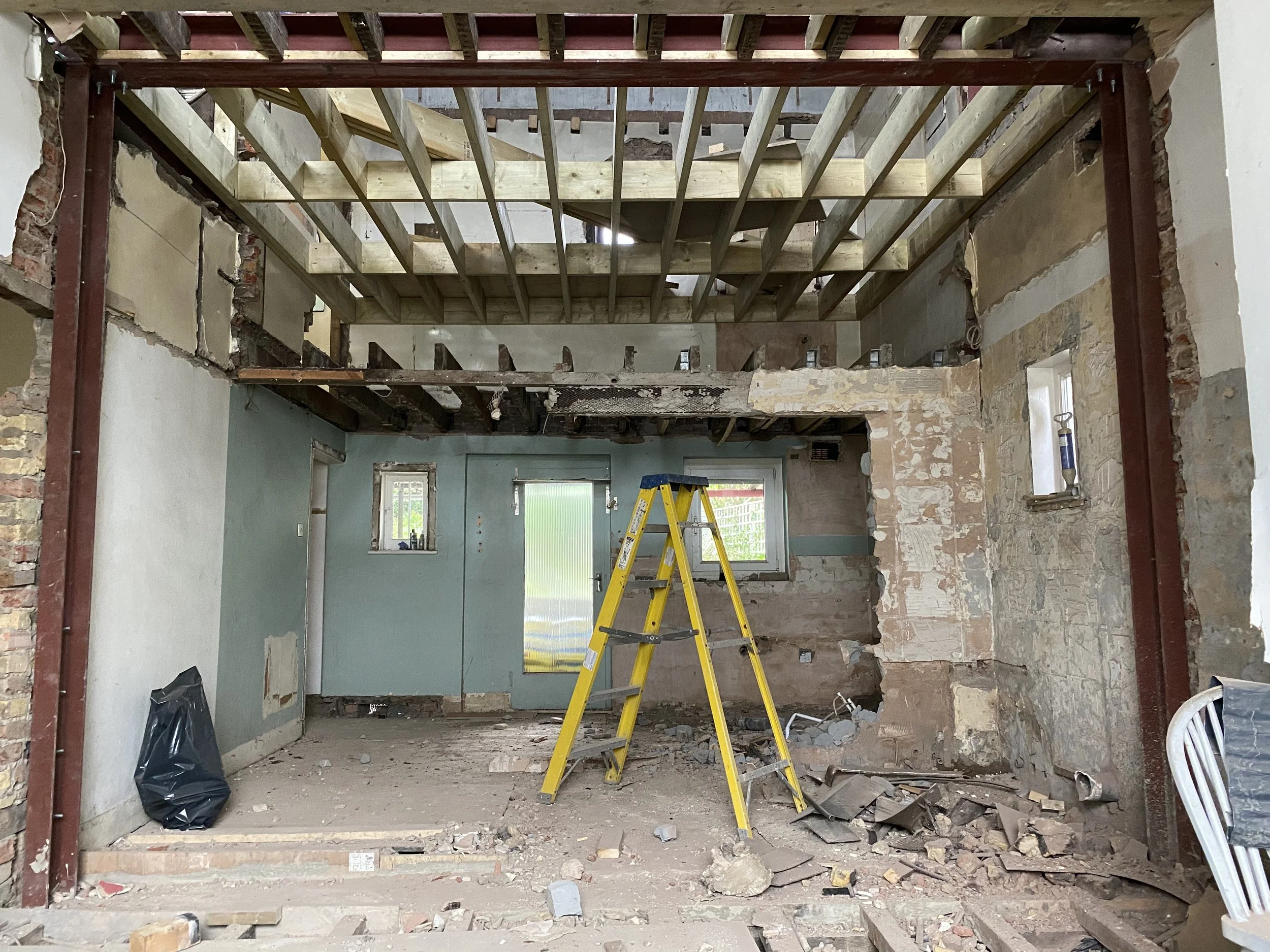

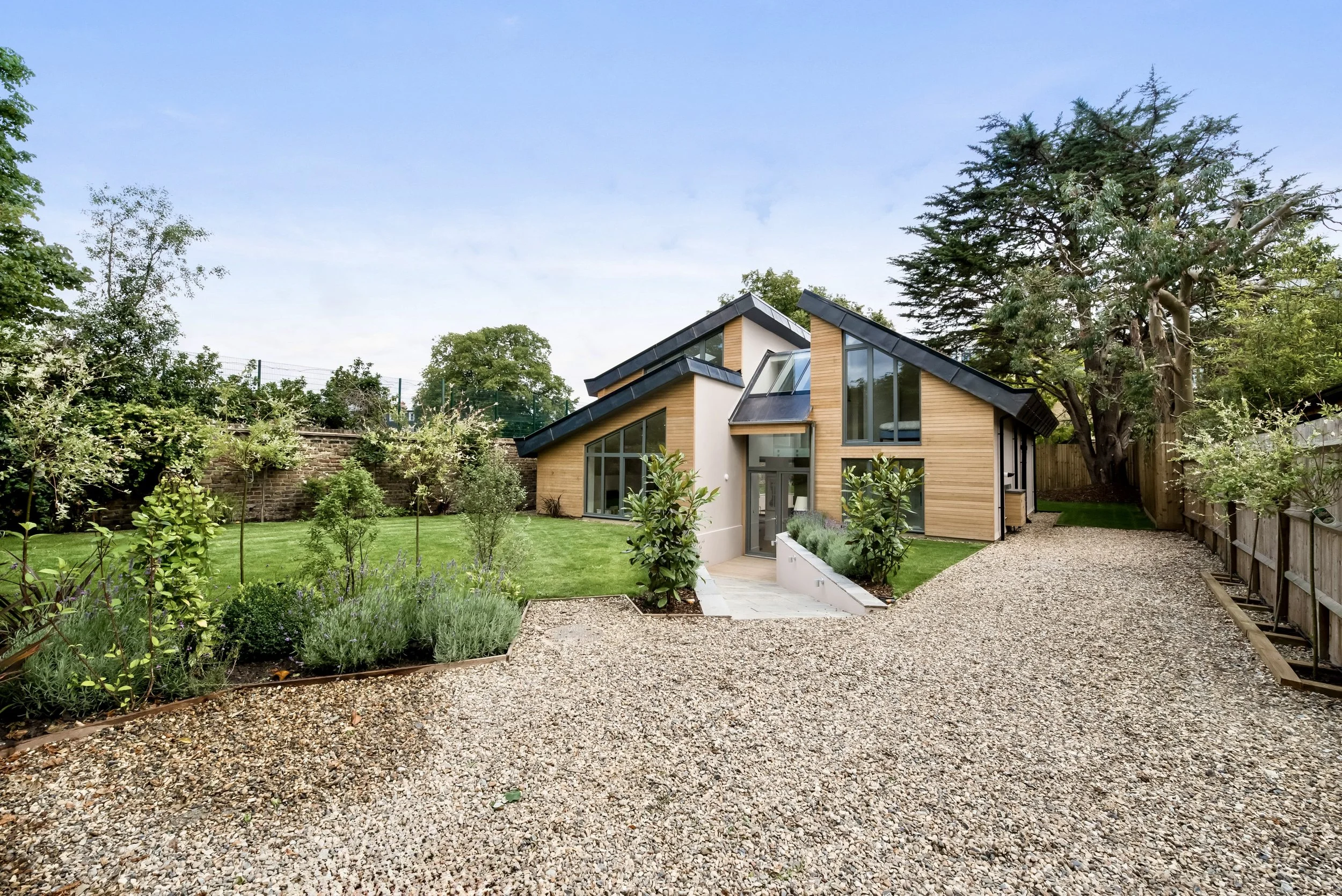
Above: the same room, during and after construction
From a developer’s perspective
Most people who manage residential projects come from architecture or construction. The approach here is different. Two decades of development work means carrying the financial risk of getting the design wrong. That experience changes what you notice and what you push back on.
A structural wall in the wrong place, storage designed too late, a kitchen that works on plan but not in use: these become expensive once a contractor is on site. Coburn's job is to catch them while they are still on a drawing.
What the service covers
Design stage involvement
Reviewing layouts, challenging proposals where they fall short, and making sure the brief is fully resolved before detailed design begins. Coordination between architect, structural engineer, and any other consultants.
Procurement
Selecting and appointing contractors, reviewing tenders, and negotiating terms. The right people on the right basis.
Construction
Regular site attendance, cost monitoring, programme management, and quality review throughout the build. Valuations checked, variations controlled, scope protected.
Interiors
Selection and specification of finishes, fittings, and furniture, coordinated alongside the build programme. Trade relationships mean clients benefit from preferential pricing throughout.
Handover
Snagging, defects and final account. Nothing is signed off until every item is closed and the figures are agreed.
Each project receives close personal involvement throughout. For that reason, Coburn takes on a limited number of projects each year.
If you are at an earlier stage and want an independent view of the layout before committing to a direction, the Design Advisory is where most conversations begin.
Fees are calculated as a percentage of build cost.